Discover Smarter Ways to Improve Sorting Accuracy, Speed, and Consistency
Ask any packhouse manager what keeps them up at night and you’ll rarely hear “we need faster sorting.” What you’ll actually hear is some version of: “we need sorting we can rely on, at the volume we’re already committed to, without hiring our way out of every peak season.” Accuracy, speed, and consistency sound like three separate goals, but on a real line, they’re the same problem wearing different clothes.
Why the Three Can’t Be Solved Separately
Push for speed alone and accuracy usually pays the price a line running faster than a grading method can reliably keep up with just means more mistakes moving at a faster rate. Push for accuracy alone, the traditional way, and you add more inspection stations and more people, which slows the line and adds cost. And even a system that’s fast and accurate on day one can quietly become inconsistent as fatigue, staff turnover, or shift changes creep in.
Smart grading solutions treat these as one problem: a system where the accuracy doesn’t degrade as speed increases, and doesn’t drift depending on who’s on shift or how many hours in they are.
What “Smart” Actually Means Here
In practice, that means a few things working together rather than any single piece of hardware:
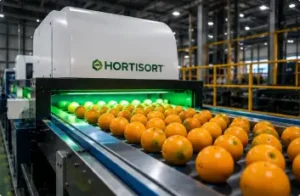
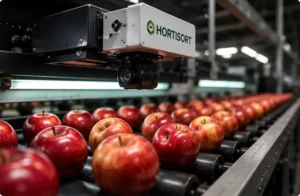
- Vision that doesn’t miss the back of the fruit. Multiple cameras capturing several angles catch defects a single top-down view would pass right through.
- Models trained per crop. A grading threshold tuned for apples doesn’t transfer to mangoes or onions a smart system is configured for the specific produce and grade standard it’s sorting to, not running one generic rulebook across everything.
- Handling that protects the fruit before it’s even graded. A rough infeed can bruise product before a camera ever sees it, which makes even a perfect vision system grade damage that didn’t need to exist. Gentle, consistent infeed is part of the accuracy story, not a separate concern.
- A system that holds its numbers as volume goes up. The real test of a smart grading line isn’t its accuracy on a quiet Tuesday, it’s whether that accuracy holds at 6am during peak harvest with the line running flat out.
The Payoff Isn’t Just Fewer Rejects
Packhouses that get this right see the obvious benefits, fewer misgraded pieces, less rework, fewer disputes with buyers over grade specifications. But there’s a second-order benefit that’s easy to underrate: predictability. When grading output is consistent run to run, everything downstream, packing schedules, buyer commitments, staffing plans, gets easier to forecast, because one of the biggest sources of daily variability has been removed from the equation.
Getting Started
The path to smarter grading doesn’t have to mean replacing an entire line overnight. Most packhouses start by identifying where inconsistency is actually costing them, a specific crop, a specific shift, a specific defect type that keeps slipping through, and building the solution around that pressure point first. The goal isn’t a bigger system. It’s a line that performs the same way in July as it does in January, whether volume is light or the season’s in full swing.