Advanced Imaging and Automation for Faster, More Accurate Fruit Grading
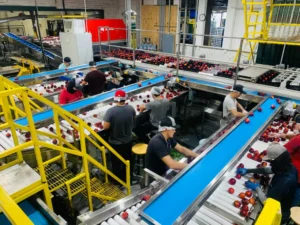
Walk onto most packhouse floors and you’ll still find the same setup that’s been there for decades: a line of workers, a conveyor belt, and a lot of trust placed in human eyesight. It works, until volume climbs, shifts get long, or buyers start asking for grading consistency that no team can hold hour after hour. That gap is exactly where optical sorting technology has started to change what’s possible on a packing line.
What Optical Sorting Actually Does
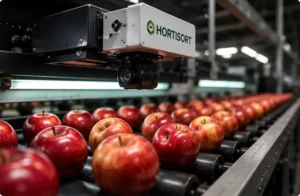
Optical sorting isn’t a single sensor or a single trick, it’s a pipeline. High-resolution cameras are positioned around the line to capture each piece of fruit from multiple angles as it moves past, rather than relying on a single top-down glance the way older sorting setups do. That multi-angle capture matters because defects don’t announce themselves conveniently on the side facing up.
Those images are fed into deep learning models trained to recognize what actually matters for grading: color variation, size, shape irregularities, and surface defects like bruising, scarring, or rot. The model isn’t just measuring pixel brightness; it’s been trained on real examples of the crop it’s grading, so it can tell the difference between a natural color variation in a variety and an actual defect that should drop a grade.
Why This Beats Manual Grading, Not Just Matches It
The obvious pitch for automation is speed, and that’s real a well-built system that can grade tens of thousands of pieces of fruit per hour, far beyond manual throughput. But the more important shift is consistency. A human grader’s judgment changes over the course of a shift, not from carelessness, but because sustained visual attention simply degrades with fatigue. A camera and a trained model apply the exact same threshold to the fruit at 8am and the fruit at 4pm. For packhouses selling into markets with strict grade specifications, that consistency is often worth more than the raw speed gain.
Built Around the Crop, Not a Generic Standard
One thing that gets missed in a lot of “AI sorting” marketing: a model trained on one crop doesn’t transfer cleanly to another. An apple’s defect profile, skin sensitivity, and acceptable color range look nothing like a mango’s or a potato’s. Real optical sorting systems are configured, camera placement, lighting, and the model itself, around the specific crop and grading standard a packhouse is working to, not dropped in as a one-size-fits-all box.
Where the Technology Is Headed
The next phase of optical sorting isn’t just about squeezing out more accuracy on defects that are already visible to the eye. It’s about tightening the loop between grading data and the rest of the operation, feeding grade-out data back to growers, flagging emerging defect patterns before they become a yield problem, and making the grading line a source of information, not just a bottleneck to get fruit past.
For packhouses still deciding whether to make the switch, the practical question isn’t whether automated grading works, the technology is mature. It’s whether your current line is costing you more in inconsistency than it would cost to fix.