
Helping Producers Achieve Consistent Quality Across Every Batch
Growers rarely lose sleep over their best batch of the season. It’s the inconsistent ones that cause problems, the shipment that gets flagged by a buyer for mixed grading, the load that looked fine leaving the packhouse and came back with complaints, the batch that somehow graded differently from the one picked the same week, from the same orchard. Quality isn’t usually the issue. Consistency is.
The Batch-to-Batch Problem
Fruit doesn’t arrive at a packhouse as a uniform product, even from a single grower. Weather during the growing season, position on the tree, harvest timing, and even which crew picked which row all introduce natural variation before a single piece of fruit reaches the line. That variation is normal, buyers don’t expect every apple to be identical. What they do expect is that whatever grade goes on the box means the same thing every time.
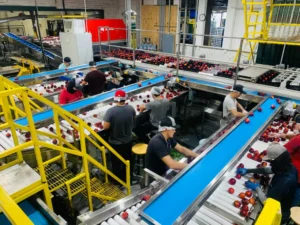
That’s where manual grading struggles most, not because people aren’t skilled, but because “the same threshold, every time, across every batch, all season” is a hard standard to hold with human judgment alone. A grader’s sense of what counts as borderline can shift subtly from one batch to the next, especially across a long season with dozens of batches moving through.
What Consistency Actually Requires
Getting the same result across every batch means removing the variables that cause grading to drift, not just tightening standards on paper. A few things matter most:
- A fixed, repeatable standard. A model trained once on the defect thresholds for a crop applies those exact thresholds to batch one and batch fifty, regardless of season fatigue or who’s supervising the line that day.
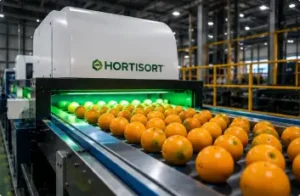
- Full visibility on every piece. Multi-angle imaging means a batch isn’t judged on a sample or a quick visual pass, every piece in every batch gets the same level of scrutiny.
- Traceability back to the batch. When grading is automated and recorded, a producer can actually see how a specific batch performed, which defects showed up, at what rate instead of relying on a grader’s memory of “that one seemed rougher.”
Why This Matters Beyond the Packhouse
Consistent grading doesn’t just protect a single shipment, it protects a producer’s reputation with buyers over time. Buyers who repeatedly receive exactly what a grade promises are far more likely to extend better terms, larger orders, and long-term contracts. Producers who’ve had even a few inconsistent batches often find themselves facing more scrutiny on every future shipment, regardless of how good that batch actually was.
There’s also a feedback loop worth mentioning: when grading data is captured batch by batch, producers get visibility they didn’t have before, which blocks, which harvest windows, or which handling practices are producing more defects. That turns grading from a pass/fail gate at the end of the line into information that can improve the next season’s yield, not just this season’s shipment.
The Real Goal
Better quality isn’t about chasing a higher grade percentage on your best day. It’s about making sure batch fifty looks as reliable as batch one, so buyers, and the producer’s own reputation, can count on it.




1 comment
A WordPress Commenter
Hi, this is a comment.
To get started with moderating, editing, and deleting comments, please visit the Comments screen in the dashboard.
Commenter avatars come from Gravatar.
Comments are closed.